uinely thick leather, an industrial walking-foot sewing machine is usually a better choice than a conventional domestic machine. Industrial models are designed to handle demanding materials and offer features that improve control over bulky seams.
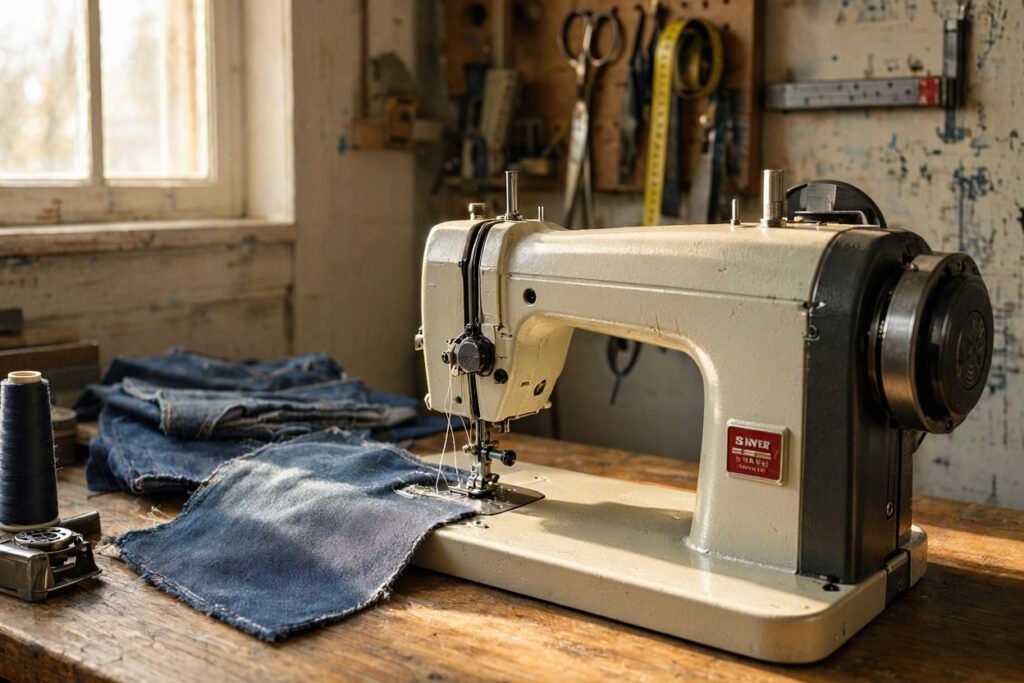
Three options worth comparing are the Juki DNU-1541S, Consew 206RB-5, and Cobra Class 17. Each serves a different type of leatherworking operation, so the best choice depends on your projects and budget.
1. Juki DNU-1541S: Best for Demanding Leather Projects
The Juki DNU-1541S is designed for heavy materials and uses a unison-feed mechanism. Its needle, feed dog, and walking foot work together to move multiple layers consistently. Juki specifies a maximum sewing speed of 2,500 stitches per minute and a maximum stitch length of 9 mm for this model. These figures describe its capabilities, not the speed you should necessarily use when sewing thick leather.
It is worth considering for leather bags, structured cases, canvas products, and demanding workshop projects. Its industrial construction makes it better suited to regular production than occasional household repairs.
The disadvantages are its cost, weight, and need for a dedicated workstation. Buyers should also confirm the included motor, table, accessories, and setup requirements.
Best for: Serious leatherworkers and workshops handling substantial materials regularly.
2. Consew 206RB-5: Best for Leather and Upholstery
The Consew 206RB-5 is another strong industrial option. Its compound-feed system combines drop feed, needle feed, and alternating walking feet to help move layers evenly.
According to the manufacturer’s specifications, it supports stitch lengths up to 10 mm and provides approximately 14 mm of presser-foot clearance. Consew lists leather, vinyl, canvas, upholstery, and various coated materials among its applications.
This makes the machine particularly relevant for leather bags, furniture upholstery, luggage, outdoor covers, and similar products.
Its main drawback is the space and investment required for a complete industrial setup. It is also important to distinguish a machine suitable for medium-to-heavy leather assemblies from one specifically designed for exceptionally dense leatherwork.
Best for: Upholstery businesses, bag makers, and leatherworkers who also sew canvas or vinyl.
3. Cobra Class 17: Best for Specialized Leathercraft
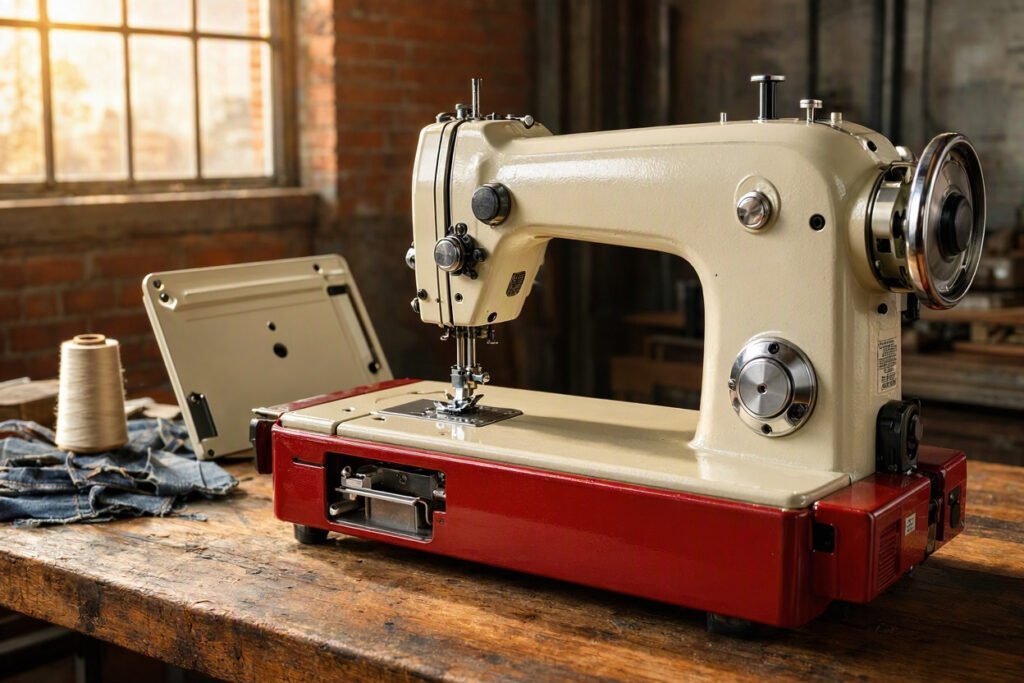
The Cobra Class 17 is another model to investigate when leather goods are your primary focus. Tandy Leather’s published product information describes a walking-foot machine with a servo motor and speed control, with a stated maximum material thickness of up to 3/8 inch (9.5 mm).
Before buying, verify the machine’s current specifications, compatible thread sizes, needle system, accessories, and suitability for your particular leather.
A specialized machine can be valuable for producing consistent seams on substantial leather goods, but its stated maximum capacity should not be interpreted as a guarantee that every combination of leather, thread, and stitch will work equally well.
Best for: Leathercraft projects, substantial bags, cases, and workshop production.
For official specifications, consult
Why a Walking Foot Matters When Sewing Thick Leather
A regular sewing machine typically relies on feed dogs beneath the material to move it forward. With thick leather, this arrangement may not provide enough control over several layers.
A walking-foot sewing machine adds an upper feeding mechanism that helps move the top layer alongside the material beneath it. Compound-feed machines coordinate additional feeding components to improve control.
This is particularly useful when sewing:
- Thick leather belts and straps.
- Multi-layer leather bags and luggage.
- Motorcycle seats and upholstery.
- Heavy canvas reinforced with leather.
- Durable work accessories and protective covers.
However, feeding performance is only one part of the equation. The machine must also support the necessary needle, thread, stitch length, and material thickness.
Choosing the Right Needle and Thread
The wrong needle can cause skipped stitches, damaged leather, or excessive resistance. Leather needles generally have cutting points designed to penetrate leather, but their point shape affects the appearance of the holes.
Choose a needle compatible with your machine and the leather you intend to sew. Test it on a scrap piece before working on the finished product because needle holes are permanent.
Thread selection matters just as much. Heavy leather goods may require thicker thread for durability and appearance, but the machine’s needle, hook, bobbin, and tension system must support that thread.
Do not automatically choose the thickest thread available. A properly matched needle and thread combination produces more reliable stitches and reduces unnecessary strain on the machine.
Stitch length also deserves attention. Very short stitches placed close together can create a perforation line that weakens leather. Longer stitches are often useful for heavy leather goods, although the appropriate setting depends on the material and seam design.
Common Problems and Their Solutions
Skipped stitches: Check the needle type, installation, threading, and bobbin placement. If the problem continues, the machine may require adjustment or servicing.
Broken needles: A bent or unsuitable needle, excessive resistance, or incorrect material handling can cause breakage. Slow down at bulky intersections and never force the leather through the machine.
Uneven seams: Check whether the layers are shifting. A walking-foot mechanism can help, but the presser-foot pressure and machine settings must still be appropriate.
Thread breakage: Inspect the needle, thread path, tension, and thread compatibility. Avoid changing several settings at once because it makes the actual problem harder to identify.
Visible or damaged leather: Test the needle and presser-foot setup on scrap material. Use suitable accessories and avoid unnecessary repeated stitching, as existing holes may remain visible.
Can a Home Heavy Duty Sewing Machine Sew Thick Leather?
Some domestic heavy duty sewing machines can sew thin leather and selected lightweight leather projects. They may be adequate for occasional repairs or small accessories when the manufacturer permits the material.
Thick leather presents a different challenge. Limited presser-foot clearance, inadequate feeding control, and incompatible thread requirements can make the job difficult.
If you regularly sew multiple layers of dense leather, a purpose-built industrial machine is generally a more appropriate investment. For lighter projects, compare the domestic machine’s stated capabilities before spending money on a larger industrial setup.
What to Check Before Buying on Amazon
When comparing a heavy duty sewing machine on Amazon, examine more than the advertised motor power or customer rating.
Check the maximum supported material thickness, feeding mechanism, stitch length, presser-foot clearance, compatible needle system, and thread range. Confirm whether the listing includes the motor, table, speed controller, and required accessories.
Read customer reviews for recurring complaints about setup, missing components, stitch consistency, and seller support. Industrial machines can be expensive to ship, assemble, and return, so warranty conditions and local servicing options deserve careful attention.
For an affiliate website, provide an honest explanation of each machine’s advantages and limitations. Clearly disclose qualifying-purchase commissions, and do not claim personal testing unless you have genuinely tested the product.
The Juki DNU-1541S is worth considering for demanding leather projects that benefit from unison feeding. The Consew 206RB-5 is a practical industrial choice for leather, upholstery, canvas, and luggage, while the Cobra Class 17 deserves consideration for specialized leathercraft.
The best heavy duty sewing machine for thick leather depends on the materials you use, the thickness of your finished seams, your thread requirements, and how frequently you sew.
Compare the complete machine setup rather than buying solely on the basis of power or price. The right equipment will help you achieve consistent stitches, reduce avoidable sewing problems, and produce leather goods with a cleaner, more professional finish.