Sewing thick material is not simply a matter of using a stronger motor. Anyone who has tried stitching several layers of canvas, upholstery fabric, or vinyl knows how easily the upper layer can shift while the bottom layer moves forward. The result is an uneven seam, mismatched edges, skipped stitches, or fabric that becomes difficult to control near bulky corners. A heavy duty sewing machine with walking foot is designed to address this problem by improving how multiple layers move beneath the needle.
For home sewing enthusiasts, upholstery workers, leathercraft beginners, and small business owners, choosing the right machine can save considerable time and material. However, not every machine advertised as heavy duty includes a built-in walking foot, and not every walking foot machine is suitable for the same materials. Understanding these differences before buying is essential.
What Is a Walking Foot on a Heavy Duty Sewing Machine?
A walking foot is a specialized feeding mechanism that helps move the upper fabric layer in coordination with the machine’s lower feed dogs. Instead of relying entirely on the bottom feed dogs while the presser foot holds the upper material, the walking foot grips and advances the top layer as the stitch forms.
This coordinated movement helps reduce fabric shifting, commonly called layer creep. The benefit becomes especially noticeable when sewing slippery upholstery fabric, vinyl over foam, thick canvas, quilted assemblies, or several layers of different materials.
There is an important distinction between a domestic walking foot attachment and a genuine industrial walking foot machine. An attachment can improve fabric handling on a compatible household machine, but it does not transform that machine into an industrial upholstery or leather machine. A built-in industrial walking foot system is designed for more demanding work and may incorporate additional feeding mechanisms.
Best Heavy Duty Sewing Machines with Walking Foot to Consider
The best choice depends on the material, the thickness of the finished assembly, and how frequently you intend to sew. These three options represent different levels of capability rather than interchangeable machines.
1. Consew 206RB-5: Best for Professional Upholstery Work
The Consew 206RB-5 is a well-known industrial walking foot machine worth considering for demanding upholstery projects. Its compound feeding system is designed to move material through the machine in a controlled manner, making it useful when working with layered fabrics and heavier assemblies.
It is particularly relevant for furniture upholstery, boat covers, canvas work, automotive interiors, and certain leather goods, provided the needle, thread, and machine configuration match the material.
The machine’s industrial construction is better suited to regular workshop use than a typical domestic heavy duty model. However, buyers must account for the complete setup, including the table, motor, suitable needles, and installation requirements.
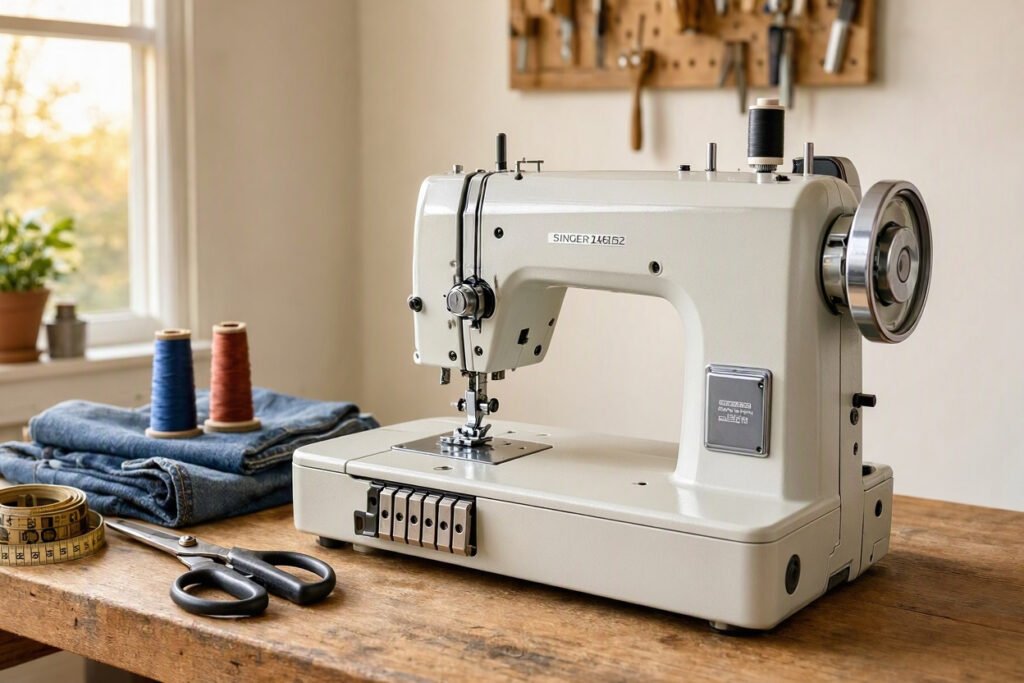
Best for: Upholstery businesses, experienced hobbyists, and small workshops handling substantial sewing projects.
2. Juki DNU-1541S: Best for Heavy Materials and Workshop Production
The Juki DNU-1541S is another industrial walking foot machine designed for demanding material handling. Its alternating presser feet and feeding mechanism help keep multiple layers moving together while maintaining consistent stitching.
This makes it a strong candidate for furniture upholstery, automotive trim, heavy fabric assemblies, and suitable leatherwork. It is more specialized than a typical home sewing machine, so buyers should expect a larger workstation and a learning period before achieving consistent results.
The machine’s capability should not be confused with unlimited thickness. Maximum material capacity, thread size, needle system, and application requirements must be checked against the manufacturer’s specifications and the supplier’s configuration.
Best for: Users who regularly sew thick materials and need a dedicated industrial machine for repeated production work.
3. A Compatible Domestic Heavy Duty Machine with a Walking Foot Attachment
For someone who sews occasionally and cannot justify an industrial workstation, a domestic heavy duty sewing machine with a compatible walking foot attachment may be the more sensible option.
A machine such as the SINGER Heavy Duty 4452 can be considered for everyday sewing, denim, canvas projects, and other materials within its specified capabilities. A walking foot attachment may help with layered fabric, but compatibility must be confirmed for the exact machine model and presser-foot mounting system.
This combination is suitable for selected home projects, such as bags, basic upholstery repairs, and thick woven fabrics that remain within the machine’s limits. It should not be treated as an equivalent substitute for an industrial compound-feed machine when sewing thick leather or working continuously with heavy upholstery assemblies.
Best for: Beginners, home users, and occasional makers who want improved fabric control without investing in a complete industrial setup.
Which Features Matter Most Before Buying?
A heavy duty sewing machine with walking foot should be selected according to its actual mechanical capabilities, not just its advertised motor power.
Feeding mechanism: Check whether the machine uses a walking foot attachment, a built-in walking foot, or a compound-feed system. These arrangements offer different levels of control.
Presser-foot clearance: Thick seams and layered materials need adequate space beneath the foot. A machine that cannot accommodate the finished material thickness will struggle regardless of its advertised strength.
Needle and thread compatibility: Heavy fabrics require suitable needles and thread. A needle that is too small may break or produce skipped stitches, while an unsuitable thread can cause poor tension and inconsistent seams.
Stitch length: Longer stitches are often useful for thick woven materials and upholstery, but the ideal setting depends on the fabric, thread, and intended application. Test on scrap material first.
Motor and speed control: An industrial servo motor can provide useful control at lower speeds, especially when navigating corners or matching seams. Beginners should prioritize controlled operation over maximum speed.
Parts and servicing: Industrial machines require suitable needles, presser feet, lubrication, and maintenance. Before buying, confirm that replacement parts and qualified servicing are available in your area.
Can a Heavy Duty Walking Foot Machine Sew Leather?
The answer depends on the type of leather and the machine’s design. Thin garment leather is much easier to sew than thick upholstery leather, multiple layers of dense hide, or leather combined with foam and heavy backing material.
A domestic heavy duty machine may handle limited leather projects if its manual permits the material and the correct needle and thread are used. However, a walking foot attachment alone does not provide the additional capacity needed for demanding leatherwork.
For thick leather goods, heavy bags, saddlery, or repeated commercial work, an industrial machine with an appropriate walking foot or compound-feed mechanism is generally the better category to investigate. Check the recommended leather thickness, needle system, thread capacity, and presser-foot clearance before purchasing.
Common Problems and Practical Solutions
Uneven layers: If one layer extends beyond another, check that the walking foot is compatible and installed correctly. Reduce speed and guide the material without pulling it.
Skipped stitches: Replace a damaged or unsuitable needle, verify that it is inserted correctly, and rethread the machine. If the problem continues, check whether the material exceeds the machine’s capabilities.
Thread breaking: Match the thread to the needle and application, inspect the threading path, and adjust tension according to the manual. Excessively heavy thread can cause problems in a machine not designed to accommodate it.
Difficulty crossing thick seams: Avoid forcing the material under the foot. Use a compatible seam-leveling tool where appropriate, and confirm that the finished thickness is within the machine’s rated capacity.
Poor results on vinyl or leather: Test stitch length and needle choice on scrap material. Unlike woven fabric, leather is permanently perforated by the needle, so repeated stitching in the same area can weaken the material or leave unwanted holes.
Is an Industrial Walking Foot Machine Worth the Investment?
If your main projects involve furniture upholstery, boat covers, automotive interiors, heavy canvas, or thick leather, an industrial walking foot machine can be a worthwhile investment. Its feeding system and workshop-oriented construction offer advantages that a basic domestic machine may not provide.
For occasional repairs and mixed household sewing, however, an industrial machine may be unnecessarily expensive and bulky. A domestic heavy duty machine with a compatible walking foot attachment can be a practical starting point if the materials remain within its limits.
Before ordering through Amazon or another retailer, compare the exact model, included accessories, motor and table configuration, warranty, seller reputation, and return policy. Some listings show a machine head only, while others include a table and motor. These differences can substantially affect the final cost.
The best heavy duty sewing machine with walking foot is the one that matches your material and workload. The Consew 206RB-5 is worth investigating for upholstery, the Juki DNU-1541S suits demanding industrial applications, and a compatible domestic heavy duty machine with a walking foot attachment may be enough for occasional home projects.
Choose according to the thickness you need to sew, the frequency of use, and the type of feeding system provided. A suitable machine, correctly matched needle and thread, and careful setup will produce better results than relying on the words “heavy duty” alone.